What Happens Backstage Is the Real Performance
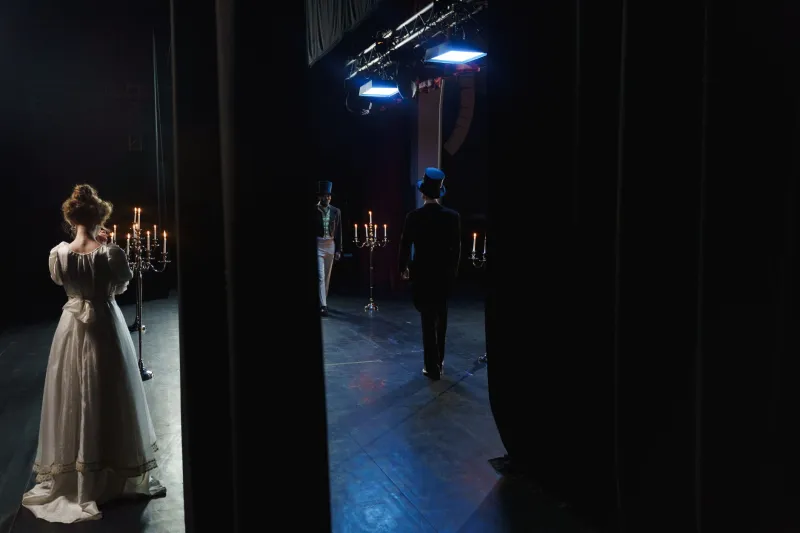
There's a moment I keep coming back to. It happened during a production I was part of a few years back — nothing Broadway-level, just a small black-box theater in a mid-sized American city where the seats were mismatched and the air conditioning worked only half the time. Opening night had gone beautifully. But what nobody in that audience saw was the Tuesday before: a full cast meltdown, a director who briefly quit and then unquit, and me sitting alone in a parking lot at 11 p.m. questioning every creative choice I'd made in the past decade.
That parking lot moment? That was the performance. The curtain call was just the receipt.
We live in an era that worships the highlight reel. Instagram, TikTok, YouTube — every platform is architecturally designed to surface the best take, the cleanest edit, the most triumphant moment. And performers, artists, and creative professionals have largely played along, curating their public-facing stories around finished products and standing ovations. But something is shifting. Audiences are tired of perfect. They're hungry for real.
The Stories We Don't Tell Are the Ones That Connect
For as long as performance art has existed, there's been an implicit agreement between artist and audience: you show up polished, we applaud. The curtain is both literal and metaphorical — it separates the mess of creation from the dignity of presentation. That separation has always served a purpose. Nobody wants to see the sausage being made, right?
Except — increasingly — they do.
Podcasts like WTF with Marc Maron built entire loyal audiences on the premise that the real story of a comedian or musician lives in the failures, the weird detours, the moments of genuine self-reckoning. Maron's guests don't just talk about their work. They talk about how they almost didn't make it, how they blew their shot, how they found something true inside all that wreckage. And listeners can't get enough of it.
This isn't just a podcast phenomenon. When Taylor Swift released folklore and started openly discussing her creative process — the isolation, the emotional rawness, the collaborative experiments — it didn't diminish the album's mystique. It amplified it. People felt like they were being let into something real. That feeling of access, of witnessing the human being behind the art, is one of the most powerful tools a performer has. And most of us are leaving it completely unused.
Why Invisible Labor Deserves a Name
The term "invisible labor" gets used a lot in workplace conversations — unpaid emotional work, administrative tasks that fall disproportionately on certain people, the behind-the-scenes effort that keeps systems running without acknowledgment. It applies to performance in a surprisingly similar way.
Think about what actually goes into a single stage performance. There are weeks, sometimes months, of rehearsal. There's the physical conditioning — dancers maintaining their bodies like athletes, actors running lines until the words stop feeling like words. There's the financial sacrifice: the side jobs that fund the auditions, the voice lessons charged to a credit card, the apartment shared with four other people to make rent while pursuing something that might never pay off. There's the emotional excavation required to access genuine feeling on command, night after night, even when your personal life is complicated or your body hurts or you're just plain exhausted.
None of that shows up in the program. None of it trends on social media. And yet all of it is the art. The performance is just the visible tip of an enormous, largely unacknowledged iceberg.
When performers begin to name that invisible labor — to actually talk about it, write about it, share it — something remarkable happens. The audience's relationship to the work deepens. A dance piece becomes not just beautiful movement but a testament to years of physical commitment. A spoken word performance carries the weight of the real story underneath the poem. The art gains dimension.
Failure as Narrative, Not Shame
One of the biggest obstacles to performers sharing their behind-the-curtain stories is the cultural stigma around failure. American culture in particular has a complicated relationship with falling short. We celebrate the comeback story, sure — but only after the comeback. In the middle of the failure, we're expected to be quiet about it.
But artists who've had the courage to share their struggles in real time — not just in retrospect — have discovered something counterintuitive: audiences don't lose respect for them. They gain it.
When a musician posts honestly about a tour that went sideways, or a theater company is transparent about a production that didn't land the way they hoped, it doesn't read as weakness. It reads as integrity. It signals that this person is serious enough about their craft to keep going even when things fall apart. That kind of honesty is genuinely rare, and audiences respond to it with loyalty that no amount of polished content can manufacture.
The Humanizing Effect
There's also something more fundamental at stake here. Performance art — theater, dance, music, spoken word — is ultimately about human connection. It's about one person saying this is what it feels like to be alive and another person responding yes, I know that feeling. That exchange only works when both parties are being real.
When performers share the stories behind their work — the creative breakthroughs that came from desperation, the personal sacrifices that shaped a piece, the doubts that almost stopped them from finishing — they're not undermining the magic. They're extending it. They're saying: the performance doesn't end when the lights go down. The story continues, and you're part of it.
That's what I've come to believe, anyway, sitting in parking lots and writing about it afterward.
The curtain matters. But what happens behind it matters just as much — maybe more. And the performers brave enough to say so are building something more durable than applause. They're building genuine connection, the kind that lasts long after the house lights come up.