3 A.M. With the Lights Off: Landing After the Show Ends

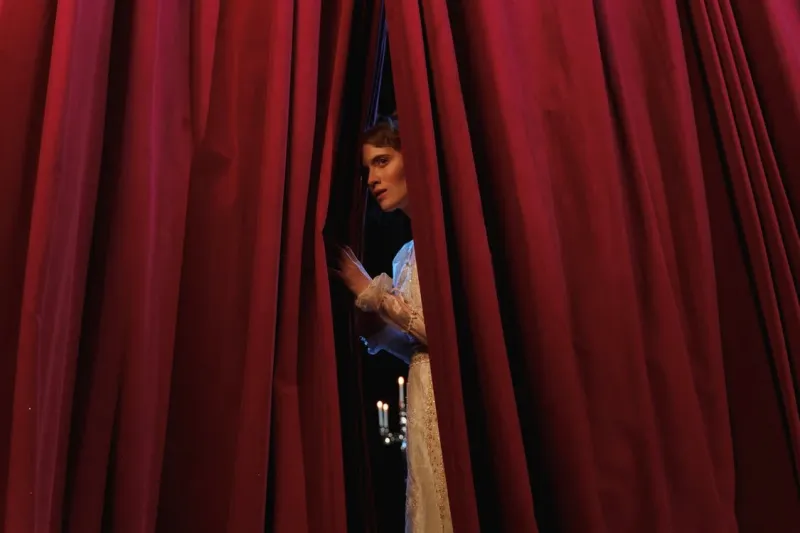
Photo: Huzaifakumo, CC BY-SA 4.0, via Wikimedia Commons
You did the thing. The room was good — genuinely good, maybe the best it's been on this run. Somebody in the third row knew every word. You came offstage buzzing, hugged four people, ate half a cold sandwich, and now it's 3:14 a.m. and you are lying in a hotel bed with the AC rattling, feeling like a fraud who should probably quit.
Nothing happened between the stage and the bed except the show ending. That's the whole crime.
The Crash Is Chemical Before It's Personal
Performance is a physiological event before it's anything else. For sixty or ninety minutes your body is flooded with adrenaline and cortisol, your heart rate is elevated, and then — if the set went well — you get a wash of dopamine and endorphins on top of it. That's not a metaphor for a good show. That's a chemistry report.
The problem is chemistry doesn't come down softly. When the stimulus stops, the body doesn't gently power down; it reverses. Adrenaline clears, cortisol lingers, and the neurochemical bonus you just earned gets spent all at once. What's left is a system that's exhausted, wired, and short on the exact chemicals that make things feel okay.
So the 3 a.m. thought — I'm not actually good at this, everyone was just being nice, I should cancel the rest of the tour — arrives in a body that is chemically incapable of arguing with it.
The Arrival Fallacy, Live and in Person
There's a well-documented trap in goal psychology where people expect that reaching a milestone will produce lasting happiness, then feel strangely flat when it doesn't. Performers get a concentrated dose of this. Six weeks of anticipation, one hour of peak experience, and then a hotel room that looks exactly like the hotel room from three cities ago.
The flatness isn't ingratitude. It's the gap between the size of the buildup and the size of the room you come back to. If you've ever finished a tour and felt hollow for a week, you weren't broken. You were just standing in the empty space where the audience used to be.
The Forty-Eight Hours Nobody Plans For
The crash usually runs a course: wired and weird for the first few hours, hollow and heavy for the next day or so, then a slow return to baseline somewhere around the second morning.
That window is when bad decisions get made. Not dramatic ones, usually — just small ones with long tails. You post something at 2 a.m. that reads as needy. You answer a booking email with a tone you'd never use in daylight. You decide, with total certainty, that the thing you've spent a decade building is over. You text someone you shouldn't text, or you don't text anyone at all and let the silence do the talking.
Most of these are avoidable if you know the window exists. A surprising amount of post-show wreckage comes down to not knowing you were in one.
What Actually Helps: A Landing Routine
I've stopped treating the after-show as dead time. It's part of the performance now — the part where you get yourself back to a functional human before the next one.
Eat something with protein in it. Not a bag of chips in the green room. Real food, ideally before midnight. The body that just spent everything needs building material, not just sugar.
Move, then stop. A ten-minute walk around the block does more for a wired nervous system than an hour of scrolling. Then commit to stopping — the walk ends, the phone goes face-down, and the night has a shape.
Don't make decisions after midnight. Not about the tour, not about the setlist, not about whether you're talented. Write the thought down if you have to, and read it in the morning. Most of it will look like a message from a stranger.
Skip the comment section. The reviews won't be there yet, and the ones that are will not be representative of anything except someone's evening. The internet is not an aftercare tool.
Talk to one person about something unrelated. A friend, a partner, a bandmate — but not about the show. Ask about their week. The fastest route out of the post-show spiral is contact with a world that isn't the one you just built onstage.
Give yourself a hard out. Lights off by a specific time, even if sleep doesn't come. Rest counts. Lying in the dark with your eyes closed is not the same as lying in the dark refreshing your own tagged photos.
Don't Confuse the Crash for a Verdict
The hardest part isn't the physiology. It's that the crash feels true in a way that the applause didn't. Praise gets discounted as politeness; the 3 a.m. despair gets treated as the real inside information.
It isn't. It's a body coming down from a very specific kind of high, in a room that has no audience in it. The work you did is the same work whether you feel it at 11:30 p.m. or 3 a.m.
So build the landing. Not because you're fragile — because you're a person who just did something enormous, and nobody ever taught you how to come back down. The applause ends. The crash doesn't have to be the last word.