The Door Price Is a Creative Choice

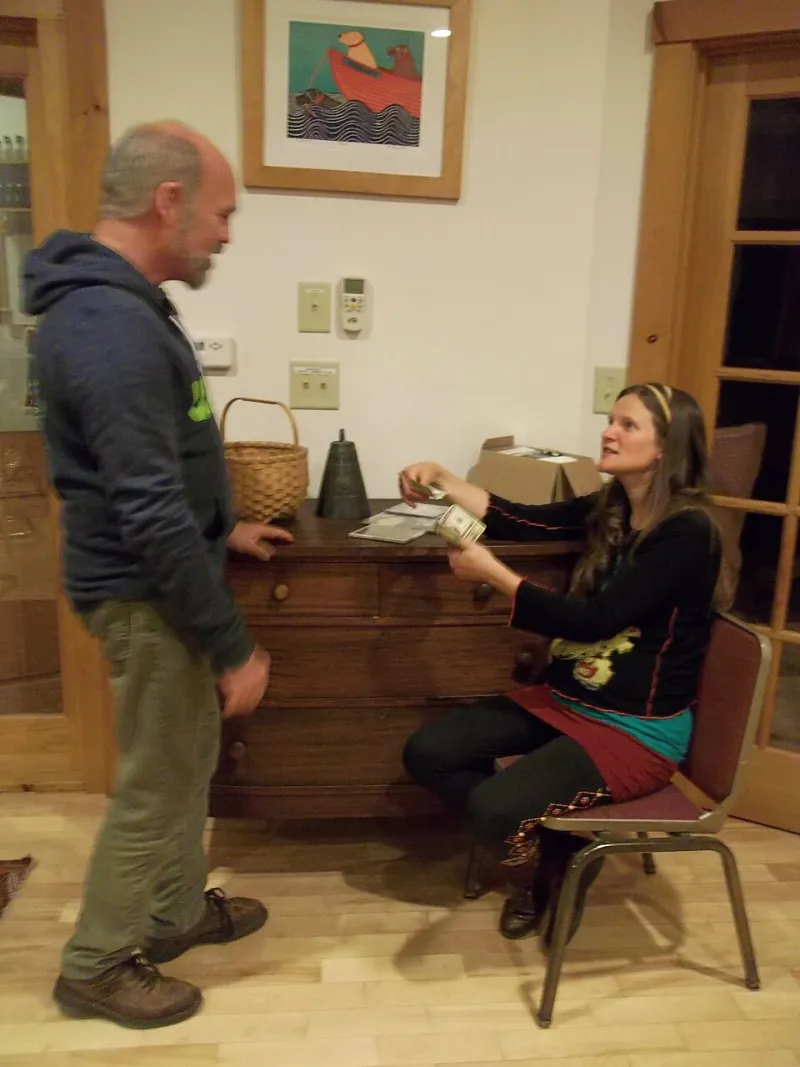
Photo: Pauline Eccles, CC BY-SA 2.0, via Wikimedia Commons
There is a comfortable story in the independent music world: if you care about art, you keep tickets cheap. If you charge more, you are chasing the wrong room. Like most comfortable stories, it is half true and mostly unhelpful.
In 2026, a performer I know decided to test it. They had been charging $40 at the door for a monthly show in a 120-cap room. The room was fine. The audience was polite. The bar was okay. But the same people kept showing up, and the show felt like a private club with a cover charge. So they dropped the advance ticket to $15 and the door to $20. They did not announce it as a grand statement. They just changed the number and watched what happened.
The room changed before the first song. More people came who had never been before. More people brought friends. The listening was different, too: less networking in the back, more attention up front. And the expectations changed. A $40 ticket can make some people feel like they bought a product. A $15 ticket can make other people feel like they bought a night out. Neither is wrong. But they are not the same thing.
The Myth of the 'Right' Audience
Performers love to talk about finding the right audience. It sounds noble. Sometimes it is just a way of saying, 'I want a room full of people who already agree with me and have disposable income.' That is not an audience. That is a focus group with a drink minimum.
Lowering the price does not automatically make the room better. It makes the room different. You might get more curiosity. You might get more chatter. You might get people who came because it was cheap and leave because it was not their thing. That is the deal. Affordability is not charity. It is a creative decision with trade-offs.
What a Lower Door Actually Changes
First, it changes who can say yes. A $40 ticket is not a fortune, but in a lot of US cities in 2026 it is a real decision. Add parking, a drink, a babysitter, and a friend, and you are asking someone to spend a hundred dollars to see a show they are not sure about. A $15 ticket lowers the risk. That matters for younger audiences, for people with tight budgets, and for anyone who is curious but not yet convinced.
Second, it changes how people listen. When tickets are cheap, some audiences treat the show as background. When tickets are expensive, some audiences treat the show as a test. The sweet spot is usually a price that says, 'This is worth your attention,' without saying, 'This is a commitment.' That is not a moral formula. It is a room-reading skill.
Third, it changes what people expect. A higher ticket can create a demand for polish. A lower ticket can create permission for experiment. Neither is better. But if you are workshopping new material, a cheaper door might buy you the patience you need. If you are touring a finished show, a higher door might help the room settle in.
Tiers, Not Martyrdom
The worst version of affordable pricing is the martyr version: slash everything, call it access, and quietly resent the audience for not paying you enough. That is not a business model. It is a slow leak.
A better approach is tiers. Keep a low-cost option for people who need it. Keep a standard ticket for people who can pay it. Add a higher-price option for people who want to support the work and can afford to do so. Be transparent about what the money covers: the room, the players, the travel, the time. Most audiences are not offended by costs. They are offended by vagueness.
The small room is not a charity case, either. A 100-cap show is not automatically more sincere than a 500-cap show. But it is a different tool. It lets you see faces. It lets you hear the room react. It lets you make mistakes without a full-scale disaster. If you lower the price, use the small room to build a real relationship with the people who show up. Do not just pack it and call it community.
The Trade-Offs Are the Point
A cheaper ticket can widen the door. It can also thin the margin. It can bring in new people. It can also bring in people who are not there for the work. It can make the room feel generous. It can also make the show feel disposable. None of that is an argument for keeping prices high. It is an argument for knowing why you chose the number.
The right price is not the cheapest one. The right price is the one that matches the night you are trying to build. Sometimes that is $15. Sometimes it is $40. Sometimes it is a tiered system with a pay-what-you-can corner and a clear note about what the money does. The point is not to perform accessibility. The point is to decide what kind of room you want, then price your way into it honestly.