Dream Collab, Nightmare Reality: What Nobody Tells You About Creating With Your Heroes
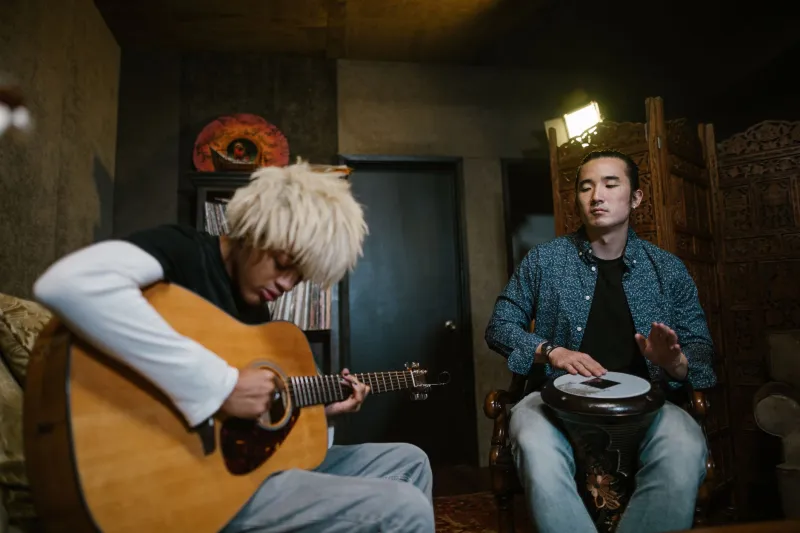
There's a specific kind of excitement that lives in the chest when you find out you're finally going to work with that person. The one whose album you wore out in high school, whose performances made you think maybe you could do this too, whose creative instincts felt like they were speaking directly to some private part of you. It's intoxicating. It also tends to be the beginning of a very complicated situation.
Collaboration with someone you've admired from a distance is one of the most misunderstood experiences in creative life. People talk about it like it's a reward — the natural culmination of years of grinding, of getting good enough, of finally arriving somewhere. And in some ways, sure, it is. But what they don't mention is how quickly that reward can start to feel like a test you didn't study for.
The Pedestal Problem
Here's the fundamental issue: you've been carrying a version of this person in your head for years. That version is curated, edited, stripped of all the boring or frustrating parts. It's built from their best work, their most compelling interviews, the highlights that made you a fan in the first place. That version doesn't have opinions about catering riders or get defensive about chord progressions or send passive-aggressive emails about credit splits.
The real person does.
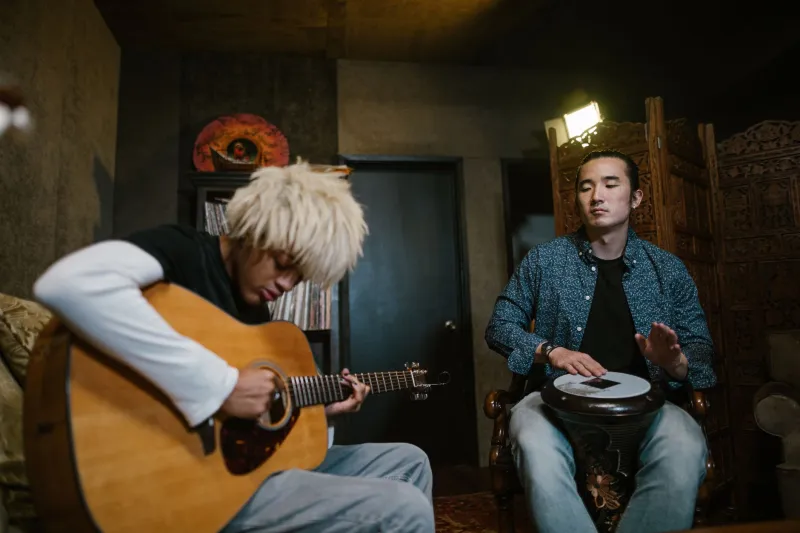
And the moment you're actually in a studio, on a set, or in a rehearsal room together, those two versions — the mythologized one and the actual human — start colliding in real time. It's disorienting in a way that's hard to prepare for. You thought you knew their creative instincts intimately, but you only knew their output. The process is a whole different thing.
A lot of artists describe this as a kind of grief, which sounds dramatic until you've been through it. You're not just adjusting your expectations — you're mourning an idea of someone that you'd been holding onto for a long time. That's real.
When Admiration Becomes Paralysis
There's another layer to this that doesn't get talked about enough: the power imbalance that comes from being the fan in the room. Even when a collaboration is technically between equals — same billing, same creative stake — the emotional dynamic is almost never equal when one person has spent years looking up to the other.
You second-guess your instincts. You defer when you shouldn't. You bite your tongue during creative disagreements because some part of your brain is still treating this person like they're untouchable, like their judgment is automatically better than yours. And then later, alone, you're furious with yourself for not speaking up.
This is the collaboration trap in its quietest form: you finally get the chance to create alongside someone who inspired you, and instead of bringing your full self to the table, you shrink. The very admiration that got you here starts working against you.
I've watched this happen to genuinely talented people. They get the opportunity, they show up, and then they disappear into politeness and deference. The collaboration technically happens, but the best version of it — the one where both people are actually pushing and challenging each other — never does.
Creative Friction Is Not the Enemy (But It Can Feel Like It)
Here's the uncomfortable truth: friction in creative collaboration is usually a sign that two real artistic voices are actually in the room. It means nobody's just nodding along. The problem is that when you're working with someone you admire, friction feels like failure. It feels like you've misread the situation, or that you're not as compatible as you imagined, or worse — that you've somehow ruined something precious by getting too close to it.
But creative tension between people who care deeply about the work is almost always productive, even when it's uncomfortable in the moment. The collaborations that produce genuinely interesting results are rarely frictionless. They're negotiated. They involve people holding their ground and then finding something neither of them would have reached alone.
The challenge is learning to distinguish between friction that's generative and friction that's just two egos refusing to budge. That's a skill, and it takes time to develop — especially when the emotional stakes are as high as they are when you're working with someone who matters to you.
How to Protect the Relationship (and Yourself)
So what do you actually do with all of this? A few things that seem to help:
Go in with lower expectations and higher presence. Not lower standards — lower expectations. The more specific your mental image of how this is going to go, the harder the landing when reality diverges from it. Stay curious about who this person actually is rather than confirming or denying who you thought they were.
Separate the admiration from the working relationship. You can still respect and be inspired by someone's body of work while also disagreeing with them in the room. In fact, treating them like a peer — like someone whose ideas are worth pushing back on — is often more respectful than endless deference. Most serious artists don't want a collaborator who just agrees with everything they say. They want someone who makes the work better.
Protect the pre-collaboration relationship by being honest early. If something isn't working creatively, say it sooner rather than later. Resentment that builds slowly over a long project is much harder to recover from than a direct conversation in week one. The friendship — if there is one — is more likely to survive honesty than it is to survive months of swallowed frustration.
Let go of the need for the story to be perfect. There's a version of this experience that you've probably already written in your head — the one where you two make something extraordinary together and it cements a lifelong creative bond. Maybe that happens. But maybe what happens instead is a solid project and a more realistic understanding of who this person is. That's not a failure. That's just what collaboration with real humans looks like.
The Other Side
None of this means you shouldn't do it. Working with people whose art has shaped you can be genuinely transformative — just not always in the way you anticipated. Sometimes the disillusionment is the point. Sometimes losing the mythologized version of someone makes space for an actual relationship, which turns out to be more interesting anyway.
The artists who seem to navigate these situations best are the ones who go in knowing that the collaboration is the thing — not the story they'll get to tell about it afterward, not the validation of being chosen, not the confirmation that their hero is exactly who they imagined. Just the work, and whoever shows up to make it with them.
That's a harder mindset to hold than it sounds. But it's the one that keeps you in the room, fully present, doing what you actually came to do.