The Better You Get, The More You Doubt Yourself — And That's Not a Bug
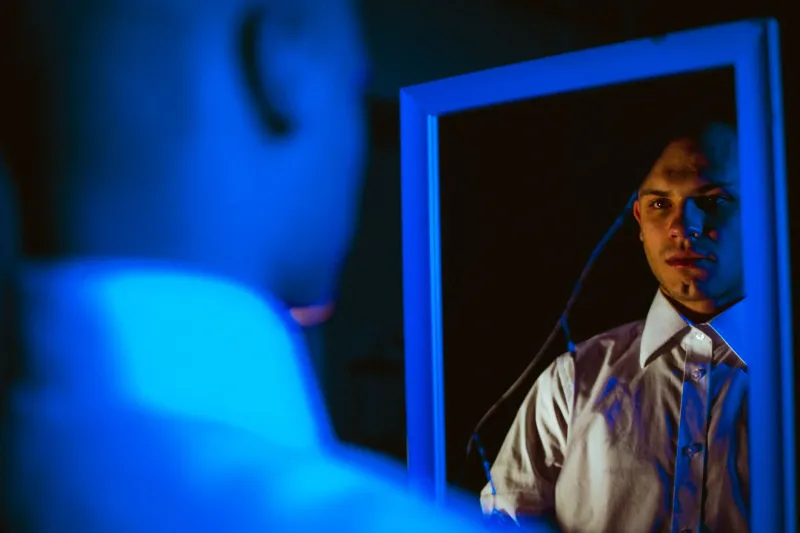
Somewhere between your first nervous performance and the moment someone calls you a professional, something strange happens. You get better — genuinely, measurably better — and instead of feeling more confident, you feel like a fraud who's just gotten better at hiding it.
If you've experienced this, you're not alone. And if you haven't experienced it yet, keep working. You will.
This isn't a motivational pep talk. It's an attempt to actually understand what's going on when skill and self-doubt grow in the same direction, and why the most accomplished people in any creative field often feel the least entitled to be there.
The Paradox Nobody Warns You About
Here's the setup: you start out not knowing much. You're naive, a little reckless, genuinely unbothered by how much you don't know because you don't know that you don't know it. Psychologists call this the Dunning-Kruger effect — early incompetence comes packaged with accidental confidence.
Then you start learning. Really learning. You study craft. You absorb feedback. You watch people who are better than you and start to see the gap between where they are and where you are. Your taste develops faster than your ability. You know exactly what good looks like now, and you can see — painfully clearly — every place where your own work falls short.
And then, somehow, people start calling you accomplished. They book you. They feature you. They ask for your advice. And inside, you're thinking: if they only knew.
This is the imposter's paradox in full effect — the idea that expertise doesn't shrink the feeling of fraudulence, it sharpens it.
What's Actually Happening in Your Brain
Neuroscience offers a useful frame here. As you develop mastery in any domain, your brain gets better at something called error detection — essentially, your neural circuitry becomes more sensitive to gaps, mistakes, and moments where your performance doesn't match an ideal. High-level performers aren't just more skilled; they're more attuned to their own imperfections.
A guitarist who's been playing for six months doesn't hear the same things in their own playing that a guitarist with fifteen years of experience hears. The beginner might be thrilled. The veteran is cringing at the same recording.
This heightened sensitivity isn't a flaw. It's literally how expertise works. But it creates a perceptual distortion: you experience your own work from the inside, with all that critical awareness, while your audience experiences it from the outside, without it. They see the result. You feel the construction.
The result is an asymmetry that never fully resolves. The more you know, the wider that gap feels — even as the actual quality of your work keeps climbing.
Why Recognition Makes It Worse, Not Better
You'd think that external validation would cut through the noise. Someone gives you a glowing review, a big booking, a platform. Surely that's evidence that you belong?
For most performers and artists, it doesn't work that way. Recognition often amplifies the stakes rather than easing the doubt. Now there are expectations. Now there's a reputation to maintain. Now the people watching you actually believe you're as good as they think you are — and that belief starts to feel like a debt you're not sure you can repay.
There's also a survivorship problem at work. When you're early in your career, you're surrounded by people at similar stages. When you reach higher levels, you're suddenly in rooms with people who've been doing this longer, harder, and with more resources than you had. The comparison set changes. The bar moves. And the voice in your head updates its assessment accordingly.
I've talked to musicians who've sold out theaters who still feel like they're one bad night away from being exposed. Actors with credits that would make most people's jaws drop who quietly wonder if the next audition will be the one where the illusion finally breaks. This isn't neurosis. It's almost a professional hazard.
The Edge You Don't Want to Lose
Here's the uncomfortable part: some of that self-doubt is actually doing something useful.
The same critical awareness that makes you feel like a fraud is the thing that makes you keep pushing. The performers and artists who stop doubting themselves — who fully arrive at the conclusion that they've figured it out — often stop growing around the same time. Certainty is comfortable. It's also kind of creatively inert.
The goal isn't to eliminate the doubt. It's to stop letting it make decisions for you.
There's a difference between the doubt that says I need to work harder, study more, dig deeper and the doubt that says I don't deserve to be here at all. The first one is a compass. The second one is a trap. Learning to tell them apart is one of the more useful skills you can develop as a creative professional.
Moving Through It Without Burning Down Your Career
So what do you actually do with this?
First, name it. Imposter syndrome is less powerful when you can see it clearly. When that familiar spiral starts — the who do I think I am monologue right before a big moment — recognizing it as a predictable psychological pattern (not a revelation of truth) creates just enough distance to keep moving.
Second, separate feelings from evidence. You feel like a fraud. But what does the evidence say? Not the evidence from your inner critic, but actual external evidence — the work you've made, the people you've reached, the things you've learned. Feelings are real, but they're not always accurate.
Third, find peers who'll be honest with you. Not people who'll just hype you up, and not people who'll tear you down — people who are also in it, who understand the texture of the work, and who can offer a reality check when your internal narrative goes sideways.
And finally, consider the possibility that a little bit of that discomfort is the price of admission to doing work that actually matters to you. Safe work doesn't generate this kind of anxiety. The stakes feel high because the thing is real.
The Long Game
The imposter feeling doesn't go away. Ask anyone who's been doing creative work long enough and they'll tell you it just changes shape. What shifts, over time, is your relationship to it.
You stop expecting it to resolve. You stop treating it as evidence that you've been found out. You start recognizing it as a signal that you're still in the game — still caring, still reaching for something just beyond your current grasp.
That's not a comfortable place to live. But it might be exactly where the best work comes from.