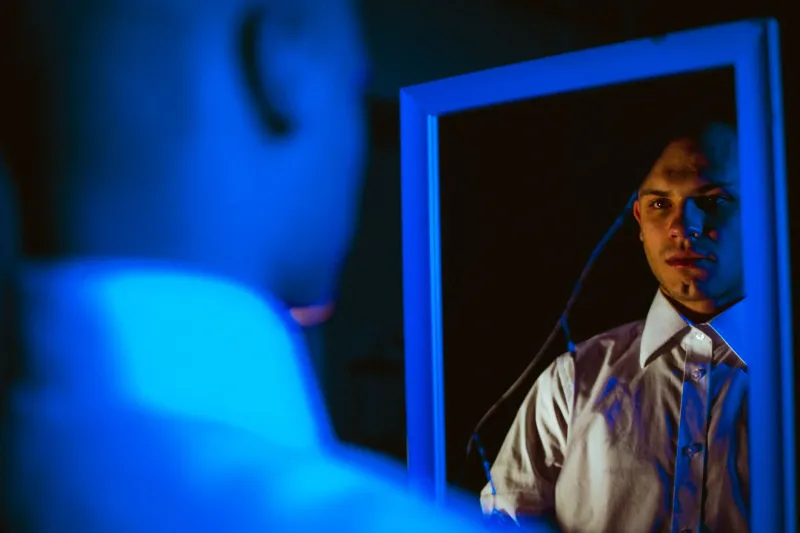
The Graceful Crash: What Great Performers Know About Falling Apart in Public
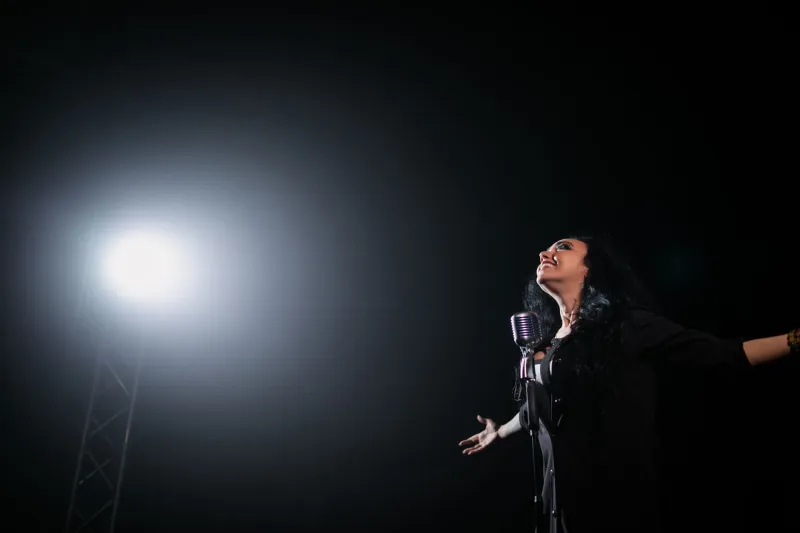
There's a moment every live performer knows. Your brain goes quiet in the worst possible way. The next line, the next chord, the next mark — it's just gone. The audience is still there, breathing, watching, waiting. And the gap between what was supposed to happen and what is actually happening starts to stretch like taffy.
We talk a lot about technical craft. We talk about emotional availability, about stage presence, about building a brand that feels authentic. But almost nobody talks about what to do in that moment — the real-time failure, the public stumble, the visible crack in the performance. And honestly? That silence in the conversation might be costing performers more than any missed high note ever could.
The Myth of the Seamless Show
There's a cultural obsession in American entertainment with the idea of the flawless performance. Blame the Super Bowl halftime show. Blame the polished perfection of streaming specials filmed over multiple nights and edited into something that feels spontaneous but isn't. We've trained audiences — and ourselves — to expect a kind of frictionless excellence that almost never exists in real time.
The problem is, that expectation doesn't protect performers. It just makes the inevitable harder to survive.
Every working artist has a catalog of disasters. The comedian who dropped their entire closer because the crowd energy threw them off. The theater actor who walked out of the wrong door and had to improvise their way back into the scene. The touring musician who watched the entire backing track crash mid-song in front of a sold-out arena. These aren't edge cases. They're the texture of live performance. The question is never really if something will go sideways — it's whether you've built the internal infrastructure to handle it when it does.
What's Actually Happening in the Audience's Head
Here's the counterintuitive part: audiences are not nearly as unforgiving as performers assume.
Psychologists who study live performance talk about something called the "pratfall effect" — the phenomenon where a person's perceived likability actually increases after they make a visible mistake, provided they handle it with some degree of composure. The theory is that imperfection signals humanity, and humanity is what audiences are really there for. You can watch a technically perfect rendition of anything on YouTube. What you can't stream is the feeling of being in a room with someone who is genuinely, vulnerably, presently there.
When a performer freezes, stumbles, or visibly recovers, the audience doesn't automatically check out. More often, they lean in. A shared moment of "oh, this is real" can do more for the performer-audience bond than ten minutes of polished execution. The mistake itself isn't the problem. The response to the mistake is everything.
The Psychology Behind a Clean Recovery
So what separates a performer who recovers well from one who unravels?
A big part of it is what sports psychologists call "cognitive reframing" — the ability to reclassify what just happened before panic has a chance to set in. Instead of the internal monologue becoming I just ruined this, the practiced performer shifts almost immediately to okay, what's the next right move? It sounds simple. It is not simple. It requires a kind of mental rehearsal that most performance training completely skips over.
Some performers build this through deliberate exposure — intentionally putting themselves in uncomfortable, uncontrolled situations during rehearsal so the nervous system stops treating unexpected events as emergencies. Improv training, for all its reputation as a comedy tool, is genuinely one of the most effective ways to develop this muscle. The core principle of improv — "yes, and" — is essentially a recovery philosophy. Whatever just happened, accept it as real and build forward from it.
Others develop what you might call a "recovery persona" — a version of themselves that's slightly more relaxed, more self-aware, more willing to let the audience in on the joke of the situation. Some of the most memorable live moments in entertainment history weren't planned. They were someone deciding, in a fraction of a second, to let the audience see them figure it out.
The Tactical Side Nobody Talks About
Beyond psychology, there are practical habits that change outcomes.
Know your anchors. In any performance, there are a handful of moments that are so deeply rehearsed they're essentially automatic — the opening line, the chorus, a physical gesture that grounds you. When things go wrong, experienced performers don't try to reconstruct the whole thing. They navigate toward the nearest anchor point and let muscle memory take over from there.
Buy yourself a breath. Silence feels catastrophic from the inside. From the outside, a deliberate pause reads as confidence. A two-second breath between the mistake and the recovery can completely change how the moment lands. It signals that you're not rattled, even if you absolutely are.
Name it or leave it. There's a choice performers have to make in real time: acknowledge the mistake or move past it. Neither is universally right. A forgotten line in a dramatic monologue might be better left unacknowledged — drawing attention to it breaks the world you've built. A technical failure in a concert, though, often lands better with a quick, human acknowledgment. Reading which one the moment calls for is a skill, and it gets sharper with experience.
Debrief without self-destruction. What happens after the show matters too. There's a version of post-performance reflection that's genuinely useful — a calm, honest look at what happened and what you'd do differently. And then there's the spiral. Learning to do the first one without sliding into the second is arguably as important as anything that happens onstage.
What This Actually Says About Craft
I think the reason recovery gets so little airtime in performance education is that it requires admitting something uncomfortable: you will fail in public. Not hypothetically. Actually. And the goal isn't to prevent that — it's to become someone who can move through it without losing the thread of what you're doing or who you are.
That's not a lesser skill than technical precision. In a lot of ways, it's the harder one. Technical skills can be drilled into the body through repetition. Recovery is something closer to character — the part of you that decides, in the middle of the worst moment, to stay present instead of disappearing into embarrassment.
The performers I've admired most over the years aren't the ones with the cleanest track records. They're the ones who, when things fell apart, somehow made the falling apart feel like part of the point. Like they were showing you something true about what it costs to do this work in front of real people.
That's not an accident. That's a skill. And it's time we started treating it like one.