Waiting in the Wings: What the Second Slot Teaches You That the Spotlight Never Will
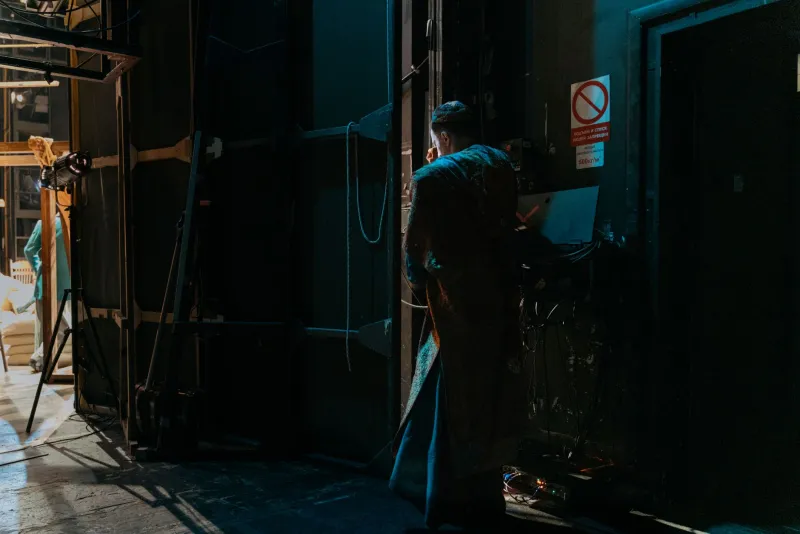
There's a particular kind of quiet that lives backstage when someone else is doing your part. You know every line. You've run every blocking note, internalized every beat. But tonight — again — it's not your night. You stand in the wings, and you watch.
Most people would call that a bad situation. I'd call it one of the most powerful classrooms in any creative profession.
We spend a lot of time in this industry chasing the lead. The feature. The top billing. And that makes sense — that's what the business rewards, what the culture celebrates. But somewhere in that chase, we quietly skip over what might be the most formative stretch of any serious artist's life: the years spent being second.
The Understudy Paradox
Here's something that doesn't get said enough: understudies are, in a lot of ways, more prepared than leads. They have to be.
A lead actor gets the rehearsal schedule, the director's attention, the built-in structure of production. The understudy has to absorb all of that and then some — learning not just their own potential performance, but the mechanics of everyone else's. They watch the lead night after night, cataloguing choices, filing away alternatives, building a mental library of what works and what's just habit. When their moment finally arrives, they're not winging it. They're drawing on a depth of observation that most leads never develop because they never had to.
The same principle applies way outside of theater. Think about the musicians who spent years as session players before anyone knew their name. The writers who ghostwrote for bigger names before finding their own voice. The designers who executed someone else's vision for a decade before launching their own studio. The invisibility wasn't a detour. It was the education.
Constraint Is a Creative Accelerant
When nobody's watching, something strange happens: you stop performing for approval and start performing for understanding.
That shift is massive. The pressure to impress — to deliver something polished, legible, marketable — lifts just enough that you can actually experiment. You can fail without consequence. You can try the weird version, the slower version, the version that breaks all the rules you've been following because nobody told you not to.
This is why passion projects that never see daylight often contain a creator's most interesting work. Not because obscurity is inherently romantic, but because obscurity removes the audience's expectations from the equation. When you're not worrying about whether something will land, you start asking whether it's true. That's a completely different question, and it leads somewhere much more interesting.
There's a reason so many artists describe their pre-fame work as their best. It's not nostalgia. It's that they were operating without the weight of an audience that already had an image of them to protect.
Being Second Choice Isn't a Verdict
Let's be honest about something that's a little uncomfortable: being passed over hurts. Getting the "we went with someone else" email, watching a peer land the opportunity you wanted, showing up to audition after audition and going home empty-handed — none of that feels like a learning experience in the moment. It feels like rejection, full stop.
But there's a difference between what something feels like and what it's doing to you.
Every time you don't get the part, you're forced to sit with your craft in a way success never demands. You have to ask hard questions. Was it the work? The timing? The fit? Sometimes the answer is genuinely out of your hands — and learning to separate what you can control from what you can't is its own form of artistic maturity. Sometimes the answer is harder: you weren't ready yet. And knowing that, clearly and honestly, is information that moves you forward.
People who coast into success early often skip this reckoning entirely. They don't develop the diagnostic muscle — the ability to look at their own work with clear eyes and identify where it's soft. The ones who spent time being second choice? They usually have that muscle in spades.
The Invisible Work Is Still Work
One of the more corrosive myths in creative culture is the idea that work only counts if it's seen. That if you're grinding away on something nobody's paying attention to, it's not building toward anything real.
That's backwards.
Skill doesn't care about your audience size. Repetition doesn't care about your follower count. The hours you put into the craft when nobody's watching are the same hours, doing the same neurological work, building the same muscle memory as the hours you spend in front of a crowd. In some ways they're more valuable, because you're not splitting your attention between the work and the performance of the work.
Some of the most technically sophisticated performers alive built their foundation in near-total obscurity — playing small venues, running workshops, doing regional theater, recording demos that never got released. The work was real. The growth was real. The audience just hadn't caught up yet.
Learning to Watch Instead of Just Waiting
There's a version of being in the wings that's just passive waiting — marking time until your moment arrives, going through the motions, mentally checked out. That version doesn't teach you anything.
The version that actually works requires a different posture. It requires watching with intention. Asking what you'd do differently. Noticing the choices the person in the spotlight is making and filing them away — not to copy, but to understand. It requires treating someone else's performance as a masterclass rather than a reminder of your own absence from it.
That's a hard mental shift. It requires a certain generosity toward the person who has what you want. But the performers who make it tend to develop something that's genuinely rare: a sophisticated, almost architectural understanding of how great work is built, because they've spent so long studying it from the outside.
The Long Game
None of this is an argument for being content with invisibility forever. The goal is still the work, still the stage, still the creative life you're building toward. But the path there almost always runs through a stretch of being second, being unseen, being the one in the wings.
The performers who last — who build careers that hold up across decades and shifts in taste — tend to be the ones who used that stretch well. Who treated the backup plan not as a failure state but as a training ground. Who understood, maybe without even articulating it, that the understudy principle was working in their favor the whole time.
Your moment in the spotlight will be built on everything you learned when nobody was watching. That's not a consolation. That's the whole story.